분석 보고서는 쌓이는데, 결정은 못 내리고 있습니까?
정책 대안의 비용효과·예산영향·불확실성을 통합 비교하고, 감사 대응 가능한 의사결정 패킷(Decision Brief + Methods + What-Changes-My-Mind)을 납품합니다. 2주면 첫 권고안. 4~6주면 감사 대응 가능한 Decision Packet.
Not a dashboard. A decision engine.
산출물: Decision Brief (10p) + Methods & Assumptions (2–8p) + What-Changes-My-Mind (1p)
Harvard · UCL · Cornell · 대한민국국회 · 경기도의회 · AcademyHealth Award · gBETA accelerator (US)
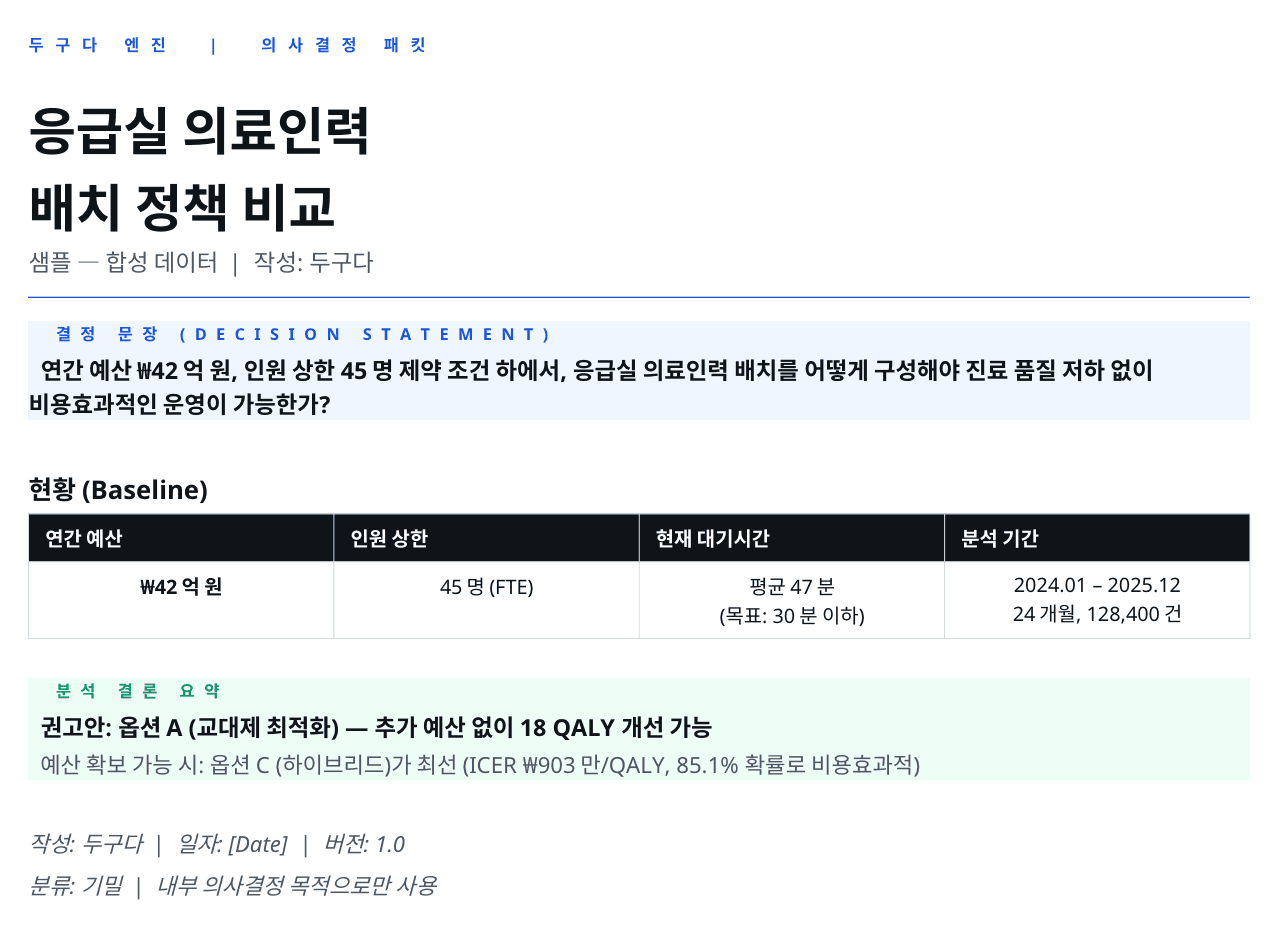
실제 산출물
실제 산출물을 직접 확인하세요
국회 의료인력 정책 사례를 기반으로 작성된 실제 Decision Packet 샘플입니다. 결정 요약서, 방법론 메모, 투명성 페이지가 포함됩니다.
감사가능한 결정 패킷 (Auditable Decision Packet)
모든 결과는 검증 가능한 결정 패킷으로 납품됩니다
비용효과분석, 예산영향분석, 불확실성분석, 감사추적이 포함된 완전한 의사결정 패키지
Doogooda가 하는 일
하나의 의사결정 엔진. 여러 정책 영역.
누구에게 필요한 Decision Engine인가?
트레이드오프, 불확실성, 책임성이 있는 결정을 내리는 조직
정책 의사결정자
국회/지자체/정부기관 의사결정자
“어떤 정책 옵션에 예산을 투입해야 하는가 — 그리고 감사 상황에서 어떻게 그 선택을 방어할 것인가?”
필요한 것:
시나리오 비교, 비용효과분석, 예산영향분석, 그리고 권고안을 바꿀 조건에 대한 명시적 문서화.
의료 경영진
병원 경영진 / 보험자 / 제약·의료기기 기업
“이 개입이 비용효과적인가 — 그리고 그 결론이 우리의 가정에 얼마나 민감한가?”
필요한 것:
ICER가 포함된 CEA, 확률적 민감도 분석, 시간대별 예산영향분석, 감사 가능한 방법론 문서화.
분석가 & 검토자
정책분석가 / 감사·자문위원 / 연구자
“이 결과를 재현할 수 있는가? 권고안을 특정 데이터와 가정으로 역추적할 수 있는가?”
필요한 것:
버전 추적된 데이터, 투명한 모델 구조, 가정 레지스트리, 실행 수준의 감사 가능성.
왜 두구다인가
차별화된 의사결정 지원 역량
통합이 느려도 괜찮습니다.
외부 수요 + 자체 온톨로지 + 최소 운영 입력으로 첫 결정 패킷을 만듭니다.
그 다음에만, 필요한 범위로 내부 데이터 통합을 확장합니다.
EMR 통합 없이 바로 시작
공공데이터 + 최소 운영정보로 첫 결정 패킷을 만듭니다. 내부 시스템 통합은 그 다음에.
IT 부담 최소화
도메인 온톨로지로 데이터/정책/리소스를 동일 프레임에 매핑. 복잡한 통합 작업 불필요.
플랫폼이 아닌 '결정 1개' 납품
6–8주면 첫 결과물. 대형 프로젝트 부담 없이 바로 가치 확인.
감사 대응 가능한 투명성
모든 가정을 명시하고 추적. 결과의 신뢰성을 언제든 검증 가능.
무엇이 결론을 바꾸는지 명시
'어떤 조건에서 권고안이 달라지는가'를 문서화. 의사결정의 근거를 투명하게.
현실 제약 반영 최적화
예산, 인력, 규정 등 실제 제약 조건 안에서 최적의 해결책 도출.
리더십 & 경력
송리나
CEOHarvard PhD (Health Policy & Decision Science), UCL/Cornell 전임교수, 대한민국 국회 정책자문, AcademyHealth Best Paper Award, Management Science 출판
CTO
CTO · 10년+ 프로덕션 시스템 설계 및 운영 아시아 최대 규모 컨슈머 테크 기업에서 50M+ 사용자 플랫폼 신뢰성 총괄 DevOps/SRE · 클라우드 아키텍처 · 보안/컴플라이언스 (HIPAA · 개인정보보호법) · AI/ML Doogooda에서 의료·공공 운영 데이터 → 감사 가능한 의사결정 시스템 설계 총괄
💡 전자의무기록 통합 없이도 시작 가능: 외부 수요 지표 + 도메인 온톨로지 + 최소 운영 입력으로 첫 결정 패킷을 만듭니다.
의사결정 운영 진단
의사결정 1개를 "결재 가능한 단위"로 정의하고, 최소 데이터로 베이스라인을 만듭니다.
기간
2주
필요 데이터
집계 지표(주/월), 리소스 현황(인력·슬롯·룸·운영시간), 운영 제약(규정/룰) 5개 내
산출물
결정 요약서(1p) + 지표 베이스라인 + 데이터/제약 스펙(1p) + 다음 스프린트 계획
근거기반 실행 스프린트
시나리오 3–5개를 비교하고, 제약·근거·트레이드오프가 포함된 권고안을 납품합니다.
기간
6–8주
필요 데이터
외부 수요(인구/역학/지역지표) + 내부 최소 운영데이터(볼륨/리소스/제약)
산출물
시나리오 묶음(3–5) + 실행 권고안 + 감사 묶음(근거·가정·제약·대안·로그) + 다음 실험 1개
운영 리테이너
정책/룰/환경 변화에 맞춰 의사결정 룰을 업데이트하고, 월간 결정 패킷을 반복 납품합니다.
기간
월 단위(최소 3개월 권장)
필요 데이터
월간 운영 지표 + 변경 이벤트(정책/인력/프로모션/계절성 등)
산출물
월간 결정 패킷(요약+시나리오+권고+감사로그) + 드리프트/룰 위반 알림 + 룰 업데이트
* 범위/데이터 접근 수준에 따라 세부 산출물은 조정될 수 있습니다. (필요 시 비밀유지계약 후 확정)
자주 묻는 질문
궁금한 점을 빠르게 확인하세요
신뢰 증거
공식 선정, 기관 초청, 프로젝트 수행 실적
사례 연구
다양한 산업에서의 실제 프로젝트 성과
국회 의원실 — 의료인력 정책
국회 정책위원회 — 사회안전망 정책
경기도의회 — 학교시설 복합화 활성화 방안
KOMSA — 해양안전정책 영향력평가

국회 의원실
Location: 서울, 대한민국
의료 인력 분배와 지역 접근성을 위한 4가지 정책 시나리오 시뮬레이션. 국회 위원회를 위한 감사 가능한 Decision Packet 제공.
의사결정 엔진이 작동하는 방식
How we turn data into decisions
불확실성 속에서 측정 가능한 결정을 내리기 위한 5단계 프로세스
결정 프레이밍 (Decision Framing)
무엇을 결정해야 하는가? 이해관계자는 누구인가? 어떤 제약이 있는가? — 결정 문제를 명확히 정의합니다.
산출물
결정 프레임 문서 — 목표, 이해관계자, 제약 조건 명세
최소 데이터 시작 (Minimal Data Start)
최소한의 내부 데이터로 시작합니다. 부족한 데이터는 공개 데이터, 문헌, 전문가 의견으로 보완합니다.
산출물
데이터 소스 맵 — 내부 데이터 + 외부 보완 데이터 명세
인과·예측 레이어 (Causal & Forecast)
인과관계를 모델링하고 미래를 예측합니다. 시나리오별 결과를 시뮬레이션합니다.
산출물
예측 모델 + 시나리오별 결과 (비용, 효과, 위험)
최적화 & 시나리오 (Optimization & Scenarios)
제약 조건 하에서 최적 시나리오를 찾습니다. 비용효과분석(CEA), 예산영향분석(BIA), 불확실성분석(PSA)을 수행합니다.
산출물
최적 시나리오 권고안 + CEA/BIA/PSA 결과
실시간 모니터링 (Live Monitoring)
실시간 데이터로 모델을 업데이트합니다. 조건이 바뀌면 권고안도 업데이트됩니다.
산출물
라이브 대시보드 + 업데이트 로그 + 조건 변화 알림
아키텍처, 온톨로지, 분석 방법론 상세 보기
기술 상세 →검증 가능한 의사결정 시스템은 '방법과 로그'로 증명됩니다.
두구다는 "AI 추천"이 아니라, 제약·가정·근거·트레이드오프가 남는 결정 워크플로우를 설계합니다. 연구는 '논문'으로 끝나지 않고, 운영 환경에서 재현 가능한 산출물(Decision Packet)로 배치됩니다.
이 방식이 바꾸는 것
- 결정의 근거가 문서와 로그로 남습니다.
- 제약 조건(예산/인력/규정)을 위반하지 않는지 검증합니다.
- 다음 실험/개선까지 포함한 운영 루프로 납품합니다.

협업문의
아래 유형 중 하나에 해당하면, 가장 빠르게 연결됩니다.
병의원 운영결정자
Buyer / Operator Path
보내주실 내용
- 의사결정 문제 1줄
- 사용 가능한 데이터 수준 (없어도 됨)
- 결정 타임라인 (2~10주)
데이터/운영 시스템 파트너
Implementation Ally
보내주실 내용
- 통합 대상 시스템
- 보안/접근 제약
- 프로젝트 범위
감사 가능한 방법론·검증 프레임을 공동 산출물로 만들 파트너
Research / Methods Collaboration
보내주실 내용
- 리서치 질문
- 산출물 형태 (brief/whitepaper/pilot)
- 데이터 접근성
문의하기
파일럿 프로젝트 또는 제안 요청